17th Century | 18th Century | 19th Century | 20th Century
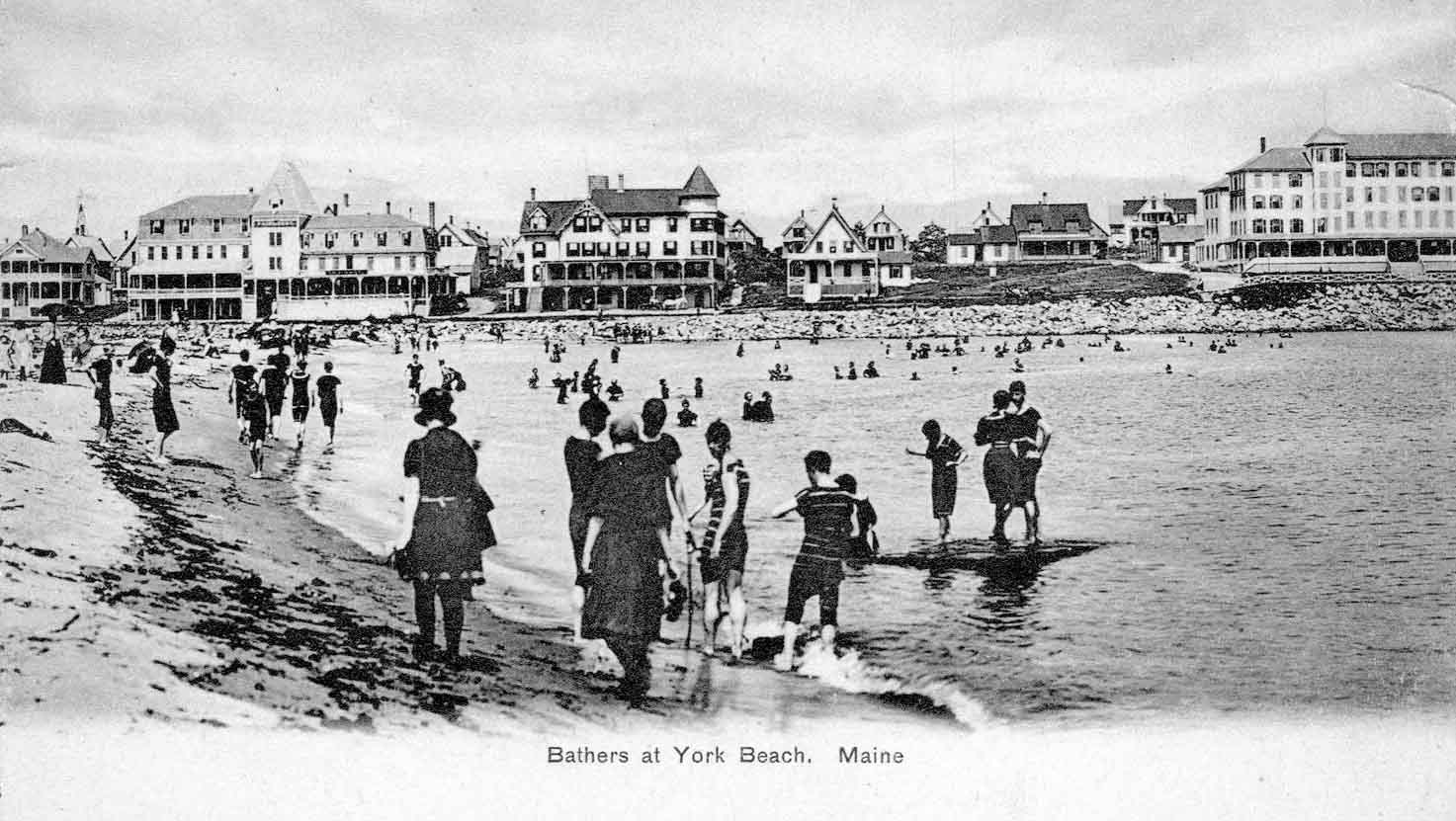
Prior to the 1900’s, tourism at York was dominated by the wealthy who could afford the grand hotels and houses. The Industrial Revolution and post-Civil War economy took families away from rural populations and into the cities. During the 17th and 18th centuries, the majority of the U. S. population resided in rural areas. In 1870, the urban population of the U. S. was 9 million — by 1910 it rose to 42 million. For the first time in U.S. history there was an increase in disposable income among the general population and an urban middle class emerged. Working-class families could now afford vacations and were looking for places to escape the pollution and heat of the city, seeking the healthy atmosphere of the shore.
Little by little, York people sold their farmland to developers or bought land to build boarding houses and hotels themselves. The Nubble, Long Sands and Short Sands areas became the center of a building boom to accommodate the growing tourist industry. Hotels, boarding houses, restaurants, a movie cinema, arcades, and retail establishments appeared.
The growth of the tourist industry had a major (and mostly positive) impact on the local economy because it created jobs. The hotel owners hired locals to maintain grounds, cook, wait on tables, and more. Local farmers produced dairy products and vegetables for hotels and restaurants. They also provided livery services, meat, baked goods, and ice. Many of the liveries provided both space for tourists' animals as well as horse and carriages to rent for excursions. The lumber industry boomed as it provided needed material for building but also wood for fuel.
In addition to jobs, the industry also created the need for services. The construction of so many wood structures in a concentrated area created the need for the York Beach Fire Department. In 1890, the York Beach social club raised $235 to buy a horse-drawn hook and ladder from Dover, N.H., and 12 leather fire buckets from the Portsmouth Naval Shipyard. A fund raiser was held at Clement's (now Inn on the Blues) in 1893 to purchase 100 second-hand books to form the nucleus of the first public library in York. By 1896, the library contained 600 books.
York Beach remained a popular destination through the 1920s, when the invention of the car gave people the freedom to explore formerly remote places. The Great Depression added to the drop in visitation, although working class families who still maintained jobs continued to vacation in York Beach and many locals still operated successful businesses. It was World War II that finally ended the Victorian era resort's popularity: "It was the end of an era, really. ...; Some of the fellas that you knew were killed in the war and didn't come back, and people began to sort of sell, they got older, and needed change. ...; a lot of men in the service were gone from the country and gasoline was rationed, you couldn't take a vacation.”
Bathers in the early 1900’s wore bathing suits that covered most of the body as tanning was not popular and modesty was important. This slowly changed throughout the 20th century.
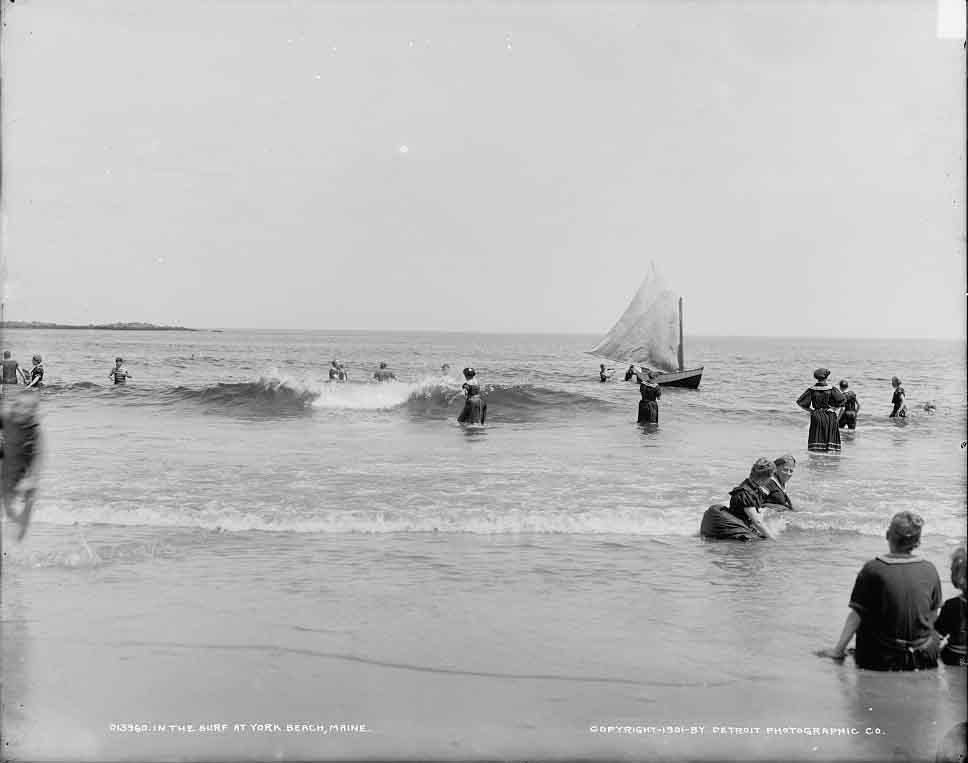 Short Sands, 1901