17th Century | 18th Century | 19th Century | 20th Century
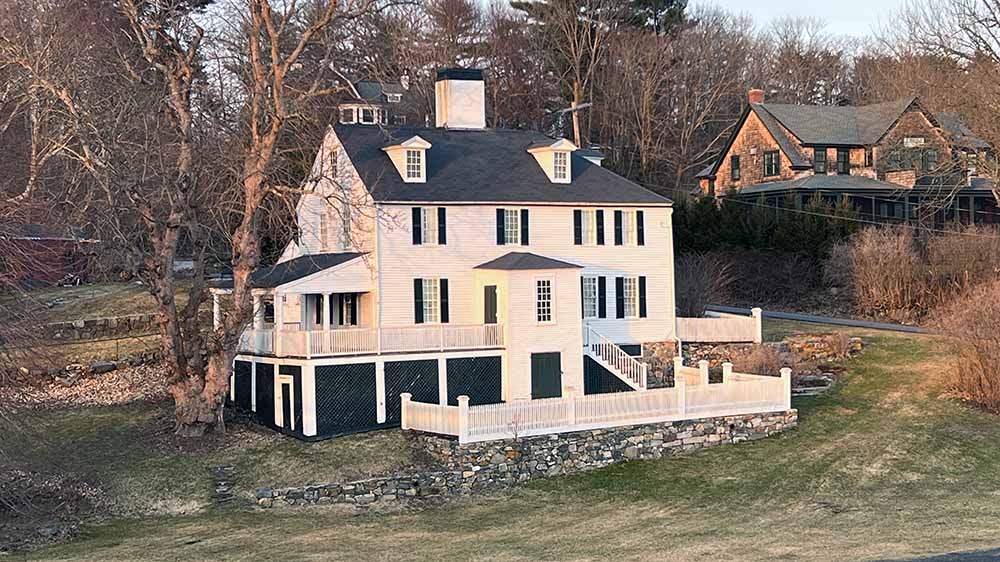
While Joseph Sayward was the family member who purchased the already existing home along the waterfront of the York River in York Harbor in 1720 from Noah Peck, the story of the house centers around his son, Jonathan. Joseph was a carpenter and millwright and was notoriously bad with finances, and due to this prominent status in the church in York Harbor, Joseph was actually voted out of debt by the town itself in 1732 . His son Joseph then purchased the house from his father for $200 – it’s likely he did so to protect the asset from any future misfortunes on his father’s part, and so it would remain in the family.
After Joseph passed away in 1747, Jonathan lived in the house with his wife & mother. At that point, the house was a traditional “two over two”, meaning two rooms on the bottom and two over them on the second floor. Jonathan added some paneling and a small bedroom on the first floor in 1767, but other than that there have been no major renovations or alterations (even to the furnishings) to the home in over 200 years – which is why it’s considered one of the best examples of an colonial interior in the United States.
Jonathan Sayward considered himself a trader, and developed quite a lumber trade, even getting involved in West Indies trading, a very lucrative business at that time. The location where he lived was perfect for it – right on the coast. He solidified his business and furthered his fortune when his only daughter, Sally, married a well known Boston merchant.
Jonathan, similar to his father, was always involved & interested in politics, and even became a representative in the General Court in Boston. However – Jonathan was a Tory, believing that the colonies were not strong enough to stand on their own, and was very fearful of the consequences of a failed rising against the British. Obviously, this was not a popular sentiment at that time, but Jonathan stood his ground, even being called out specifically by Paul Revere in a drawing where Jonathan was depicted as being driven into hell by the devil.
With his strict British loyalties, and his being so vocal about them, you can imagine this had an effect on his business, his involvement in the General Court, and beyond; he was even worried for his personal safety and that of his family.
Jonathan kept a detailed journal, which provided eye-opening information about this time in American history, Many of these entries are from 1775, which was a rough year for Jonathan. The revolution was in full swing, his wife died, and he continued to be ostracized by his beliefs.
As the years passed and America declared their Independence, Jonathan’s fortune continued to diminish. He passed away in 1797, leaving the home & contents to his grandson Jonathan Sayward Barrel. This second Jonathan was not much better with money than his grandfather. However, we can now thank him as he didn’t have money to put into the house and make alterations or renovations.
The family continued to struggle financially, even at one point mortgaging the house to Theodore Lyman. Finally, Elizabeth & Mary Barrel received the title for the house in 1841 and were able to make small adjustments, including a new doorway which faced the road and not the ocean – as times were changing and they were welcoming more people into the home from the road than the sea. However, they were very proud of their heritage and were insistent on keeping the home the way it was, even back to Joseph and Jonathan’s time.
In 1900, another descendant of the family (eventually Wheeler) took over the deed to the home and turned it into a summer home, adding on a porch and dormers in the attic for more sleeping quarters (and some updated bathrooms). The Wheeler family member presented the home in 1977 to Historic New England, asking that it be preserved “as a unified whole” – furnishings and all. And that’s how you see it today.
Thanks to Historic New England for the above narrative.