17th Century | 18th Century | 19th Century | 20th Century
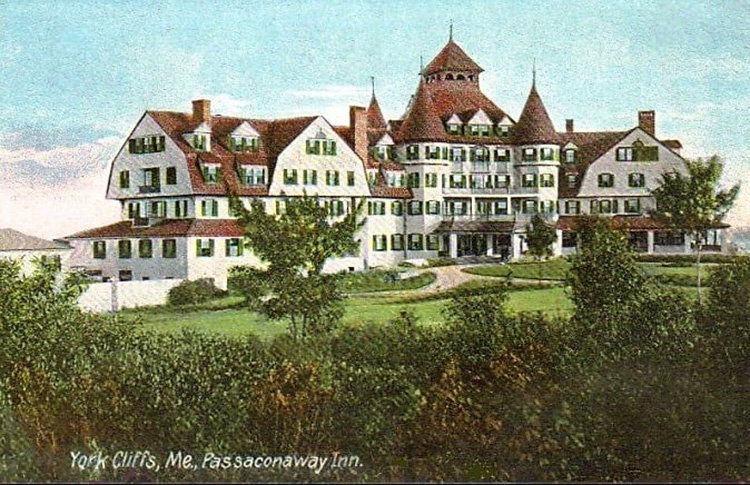
In 1890, a New York syndicate that was headed by John D. Vermeule, Cornelius C. Vermeule and Adrian Vermeule, formed the York Cliffs Improvement Company. The company purchased 400 acres of land just north of the Cape Neddick River along the coast and in the area of Agamenticus Avenue.
The group purchased the land for the purpose of developing a fine summer hotel and an exclusive summer cottage resort. The Passaconway Inn Hotel, which was built in 90 days in 1893, and opened on July 1. Over the next several years, many of the building lots were sold, and on them were built several large summer cottages, many of which stand today.
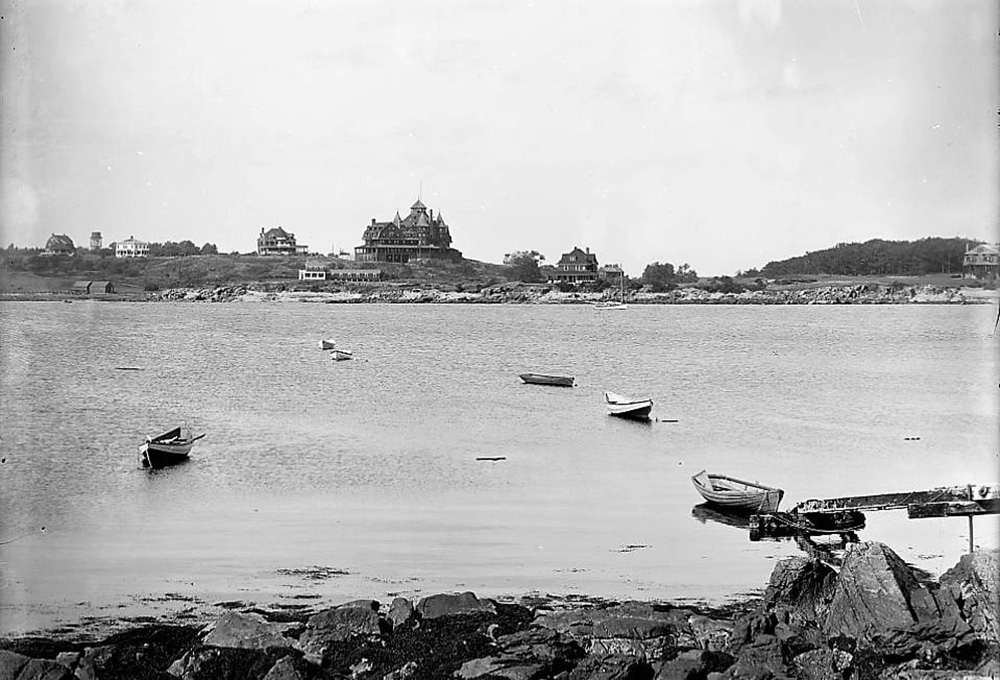
The Passaconaway Inn was the centerpiece of the York Cliffs Improvement Company's exclusive resort community, which also included several summer houses and a golf course. Lake Carolyn (at one time Passaconaway Pond) along Shore Road served the hotel and was likely stocked with fish. The hotel provided amenities like spring-fed water supply, sewage disposal, and stables for its exclusive community.
The hotel was designed by architect Edward Blaisdell and was a popular destination during the era of opulent summer hotels. The inn was destroyed by fire in the 1930s and the hotel was torn down. The land had houses, which included Agamenticus Avenue in Cape Neddick. It includes six houses on the north side of the road, extending eastward from its western junction with Shore Road, and includes two on the south side, nearly opposite the last of the six houses. All of these houses are set on large, landscaped lots. Six of them are in the Shingle style, popular for resort buildings at the time of their construction, while one is in the more elaborate Queen Anne style. The eighth house, the first encountered at the Agamenticus and Shore, has as its oldest portion a Federal period house, built about 1800, which was enlarged with Colonial Revival additions in 1895. The district was added to the National Register of Historic Places on July 26, 1984.
The name, Passaconaway (meaning Child of the Bear), comes from the sachem (chief) and later bashaba (chief of chiefs) of the Pennacook people in the 1600’s in what is now southern New Hampshire. He was famous for his dealings with the Plymouth Colony and the Massachusetts Bay Colony. He was a powerful and widely respected powwow (a ritual expert and mediator between humans and spirits similar to a shaman). English accounts note that he was allegedly able to make water burn, produce ice in the summer, make trees dance, call up thunderstorms, make dried leaves turn green, and make living snakes out of a dead one.